"Nankai Forest"
What is Nankai Forest?
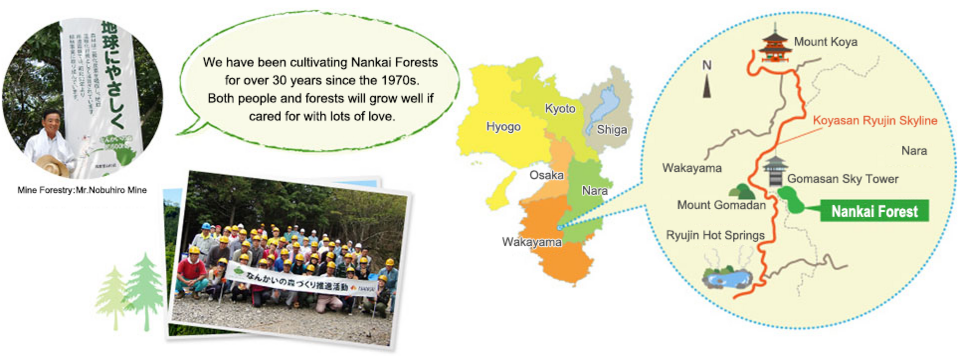
Mount Gomadan "Nankai Forest"
Address: 575 Sugikiyoguchi Senjo, Totsukawa Village, Yoshino District, Nara Prefecture
Area approximately 520ha
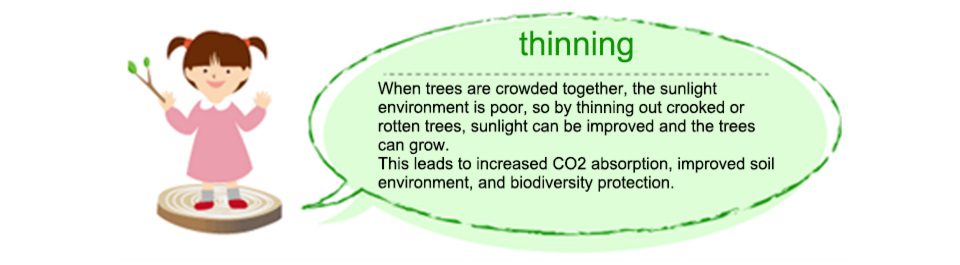
Our company began planting cedar and cypress trees around 1977, and has since been conducting planned planting and forest management (pruning and thinning). In recent years, we have been focusing on our business in terms of the SDGs, as leaving natural forests such as beech forests intact not only absorbs CO2, but also contributes to erosion control, water source conservation, and biodiversity conservation, and we are conducting volunteer thinning activities in which executives and employees participate.
Nankai Forest Creation Promotion Activities
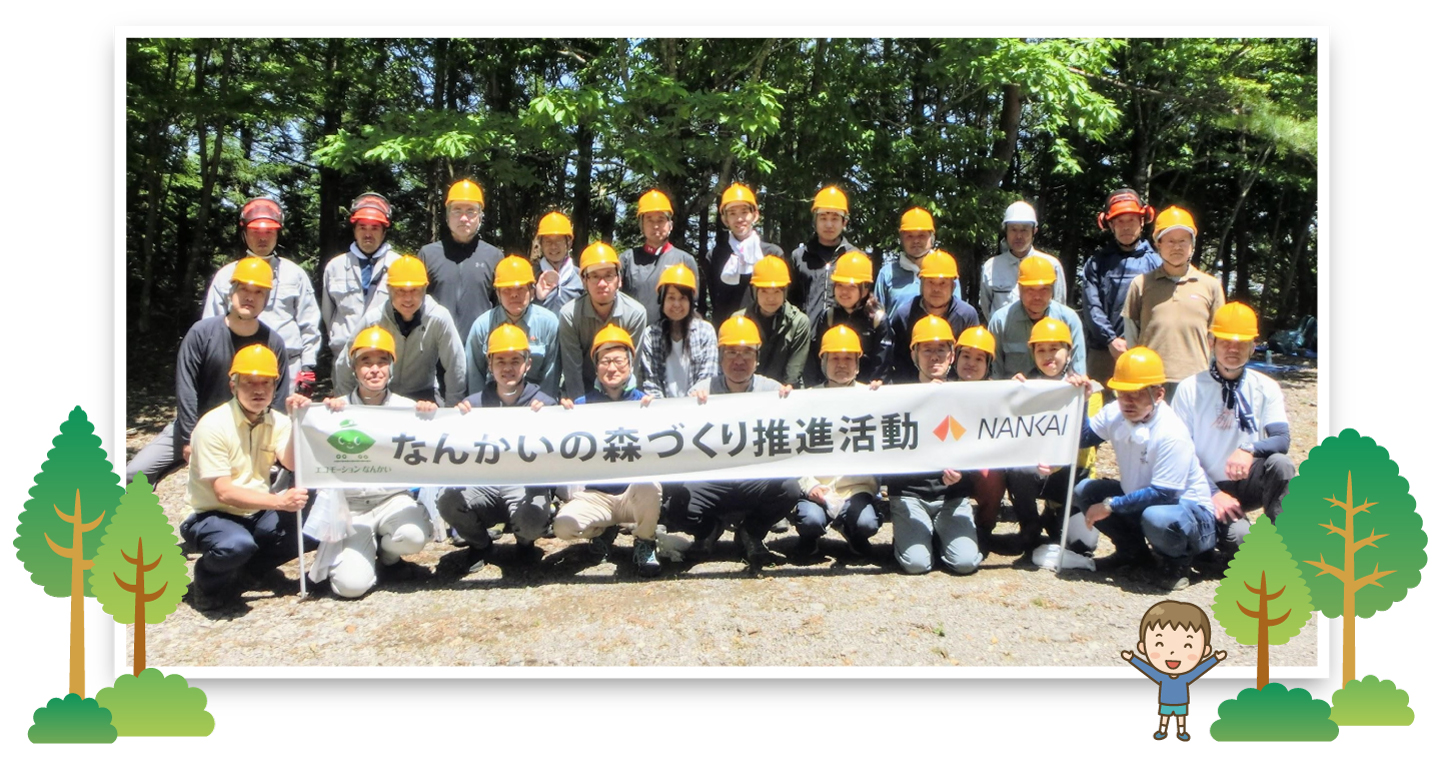
As part of the annual "Nankai Forest Creation Promotion Activity," directors and employees volunteer to thin out the trees in "Nankai Forest."
This activity has been ongoing since 2008, with dozens of participants working together each time to thin the trees.
By carrying out appropriate thinning, we help the forest grow and absorb approximately 1,300 tons (estimated) of CO2 per year, thereby contributing to the prevention of global warming.
1,300 tons of CO2 is equivalent to the CO2 emissions of approximately 216,000 people per day (calculated at 6 kg of CO2 emissions per person per day).
Cooperation: Nara Prefecture Southern Agriculture and Forestry Promotion Office, Totsukawa Village Forestry Association, Mine Forestry
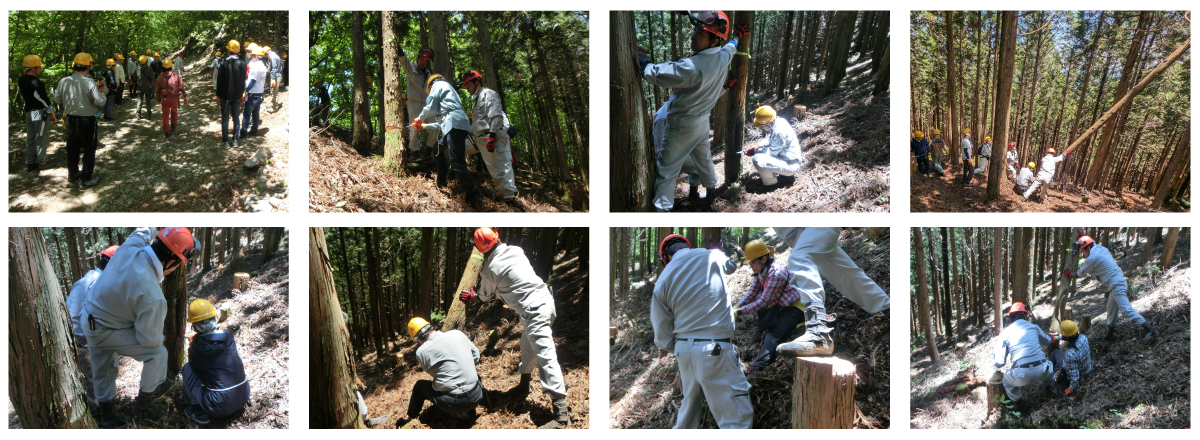
Thinning work
The employees received instruction from the people at Mine Forestry and devoted themselves to thinning work using saws. Because they were working on a steep slope, the footing was poor and there were times when they struggled to pull the saw!
[Extra Edition] Coaster making
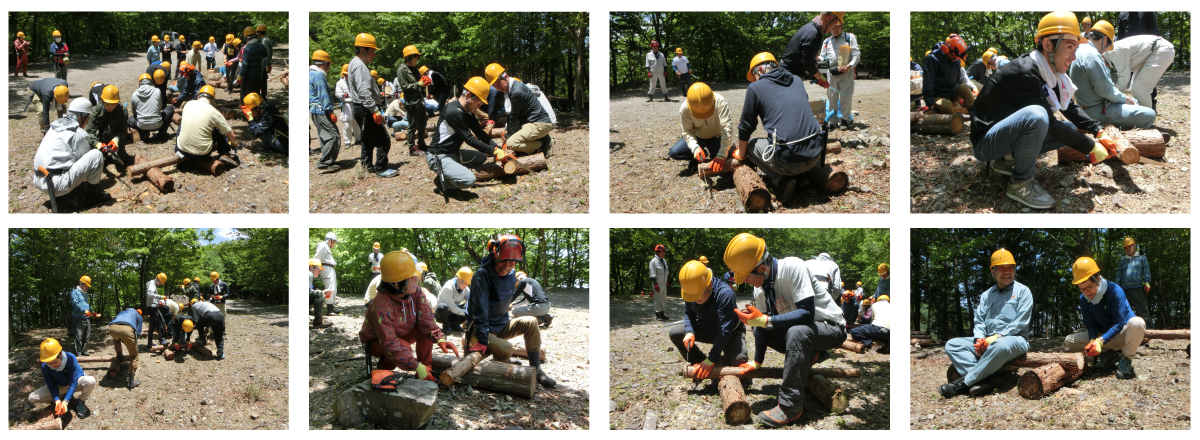
Once the work was complete, we started making coasters using the thinned wood. Even with thin logs, there are knots and the saw can get misaligned, so it takes a lot of skill to cut them straight and neatly.
We exhibit at environmental events, allowing local residents to enjoy making these coasters, and we also make building blocks using thinned wood.
Acquisition and use of J-Credit and Offset Credit certification
Nankai Forest J-Credit and Offset Credit Certification
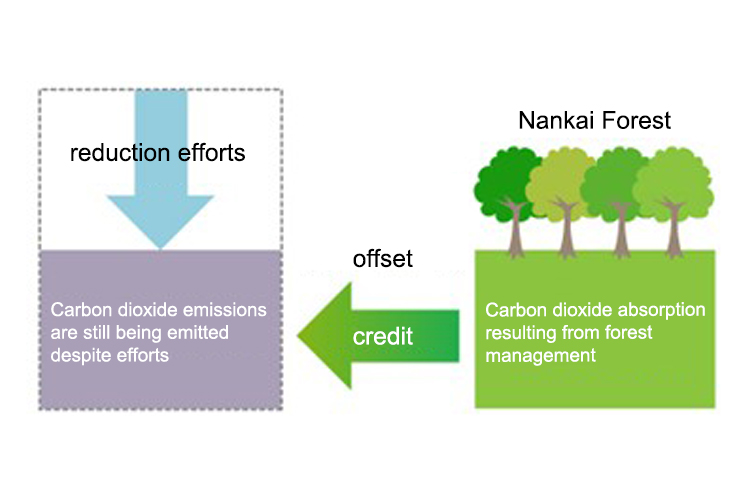
By thinning the "Nankai Forest" every year in accordance with a forestry plan, we promote CO2 absorption and obtain J-Credit. The amount of CO2 absorbed by the forest is converted into tradable "credits," which are used to offset emissions from various events.
To date, in March 2013, we received certification for 1,928t-CO2 offset credits from fiscal 2008 to 2011.
Under J-Credit J-Credit, we obtained certification for 509 t-CO2 for fiscal year 2019 in January 2021, and an additional 2,369 t-CO2 for J-Credit years 2020 to 2022 in March 2024. Going forward, we aim to obtain approximately 5,000 t-CO2 for fiscal years 2023 to 2026.
We will carefully assess the government's carbon neutral policy and the state of emissions trading, and will make effective use of the credits we acquire to help realize a low-carbon society.
What is J-Credit System?
The nationally certified J-Credit Scheme is a system in which the government certifies the amount of greenhouse gas emissions reductions and absorptions, such as CO2, achieved through initiatives such as the introduction of energy-saving equipment and forest management, as "credits." This system is a progressive integration of the domestic credit system and the offset credit (J-VER) system, and is run by the government. Credits created under this system can be used for a variety of purposes, including achieving the goals of the Low Carbon Society Action Plan and carbon offsetting.
*What is carbon offset?
The idea is to first make efforts to reduce greenhouse gas emissions such as CO2, which are unavoidable in daily life and economic activities, and then offset the greenhouse gas emissions that are unavoidable by investing in greenhouse gas reduction activities that are commensurate with the amount of emissions. (From the Ministry of the Environment website)
Examples of free provision of J-Credit and offset credits
Carbon Offset Cooperation at the G7 Ise-Shima Summit
At the G7 Ise-Shima Summit, we cooperated in a carbon offsetting initiative to virtually eliminate the CO2 emissions generated by the leaders and related parties traveling from their home countries to the venue, their accommodation, and venue operations.
Date
May 26th and 27th, 2016
Offset performance
50t-CO2
Organizer
Ministry of Economy, Trade and Industry, Ministry of the Environment, Ministry of Agriculture, Forestry and Fisheries, Ministry of Foreign Affairs
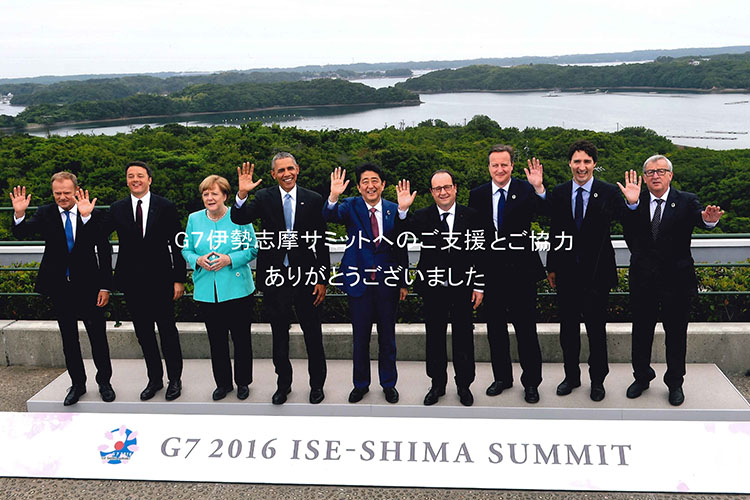
Source: Photo enclosed with the government's letter of appreciation for offsetting