

Business efficiency enhancement through DX
The impact of the COVID-19 pandemic made remote work implementation an urgent priority across the entire company, rapidly advancing our company-wide digital transformation. In June 2020, the company introduced an electronic approval system, followed by the rollout of web conferencing, chat tools, and cloud storage. This enabled smoother information sharing across departments and locations, dramatically accelerating decision-making speed.
In April 2021, internal application processes were further digitalized, introducing a system where application procedures for all departments except expense reimbursement and personnel affairs/payroll are completed entirely on the cloud. This eliminated the need for paper documents and seals in application processes used by approximately 1,000 employees, achieving reduced workload and faster processing speeds.
Building digital customer touchpoints and creating new value using minapita
On April 1, 2017, the point services for credit cards such as the “minapita Card” and “PARKS・CITY CARD” were consolidated, launching Nankai Group’s unified minapita point service. This allows points to be used as payment at Namba Parks, Namba City, and shops within Namba Station, with 1 point per 1 yen. Additionally, points can now be exchanged for minapita gift certificates, products from group companies, and local specialties along the railway lines, offering diverse usage options.
On May 9, 2022, the company launched the shared app NAMBAMARUTTO at four shopping centers in the Namba area. This app incorporates the digital membership card function of the minapita point service, promoting cardless transactions while strengthening digital customer touchpoints.
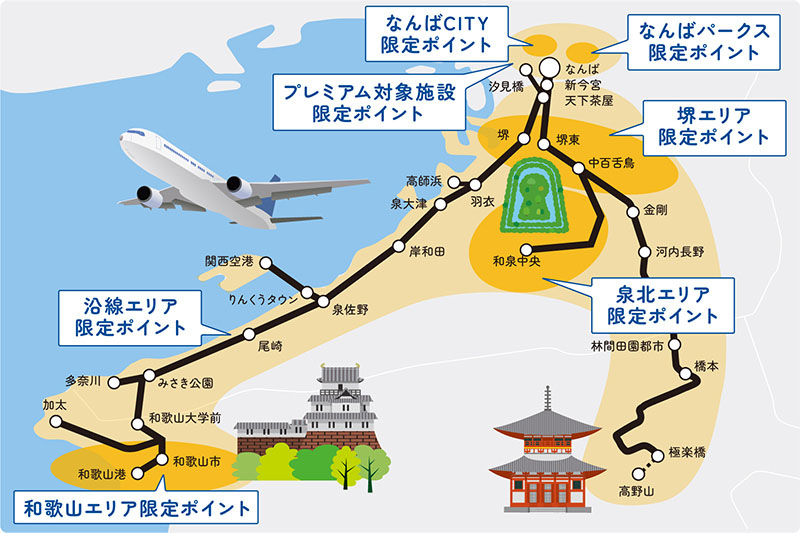
On November 1, 2023, the company upgraded the minapita point service to enhance the appeal of minapita points, expand the service beyond Namba to areas along our railway lines, and increase partner stores. This upgrade introduced facility/area-limited points. This new point feature made it possible to offer seven types of points with geographic restrictions in addition to the existing point service, enabling campaigns specifically targeted at facilities along our railway lines. Furthermore, the minapita point service became the first of its kind to offer geographically restricted limited points among railway companies (according to our research).
The company will continue to build digital customer touchpoints like these, leveraging data obtained across all sectors—including railways, real estate, and distribution—in a cross-functional manner, and striving to create new customer-centric value based on minapita.
Nankai App launched
In December 2019, our company launched a smartphone app that provides train operation information and other updates.
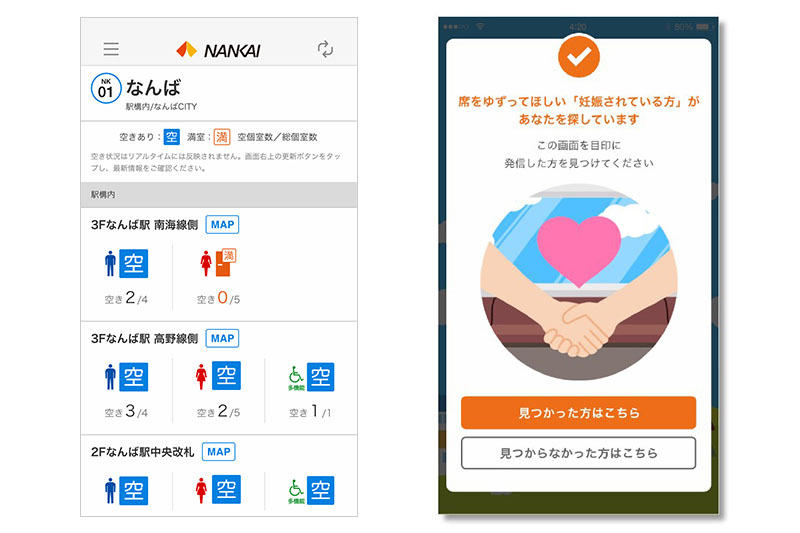
In March 2020, the company added two new features: the restroom availability check function, which allows users to check the availability of restroom stalls at Namba Station and in Namba City, and the seat sharing assist function, which supports smooth communication on trains. These features were implemented after approximately one year and four months of deliberation by a cross-departmental project team (14 members) starting in November 2018.
In addition, on November 1, 2021, five Kansai-based railway operators began collaborating on a train location information service, enabling the provision of information across a wider area.
Addressing social issues through autonomous operation
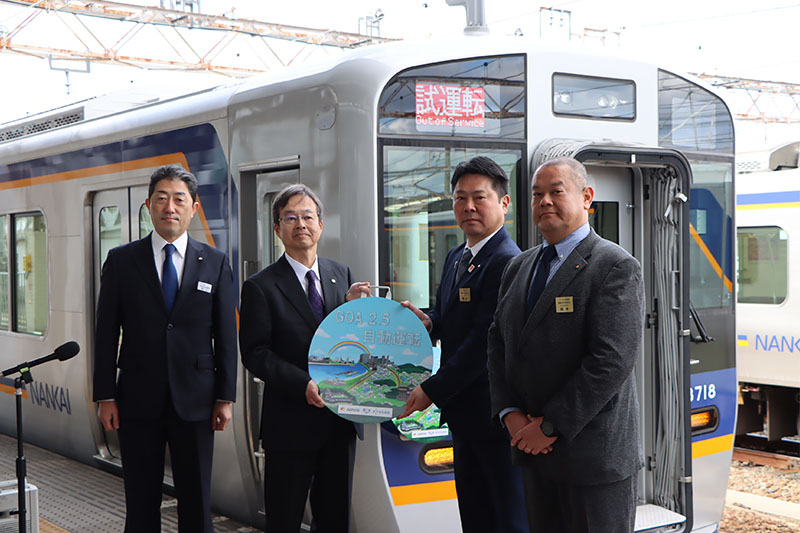
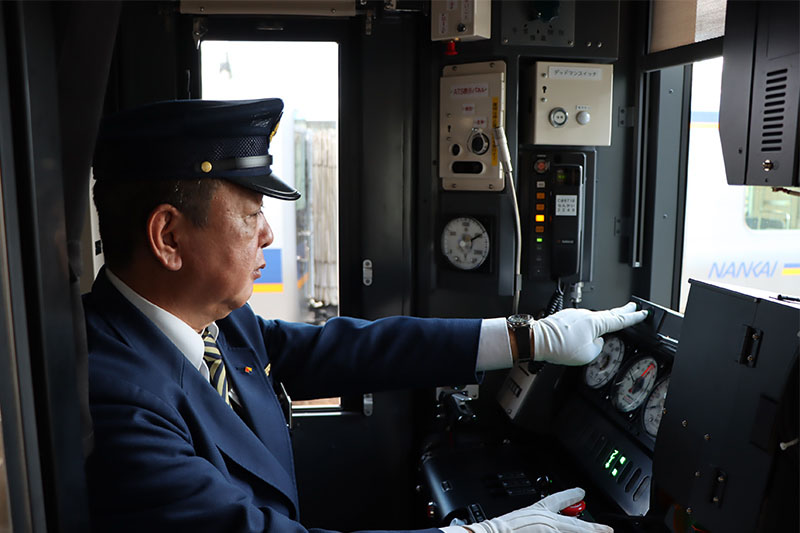
In recent years, labor shortages due to the declining working-age population have become a societal challenge, and autonomous train operation is being advanced as a countermeasure. Amidst increasing difficulty securing train crew members, our company has been preparing autonomous operation demonstration tests with Kyosan Electric Manufacturing since July 2022. This aims to achieve GOA 2.5 autonomous operation, where non-driver crew members operate from the front car, leveraging existing infrastructure.
Autonomous operation demonstration tests commenced on the Wakayamako Line on August 29, 2023. Based on test results regarding safety, stability, and handling of abnormal situations, the system underwent safety evaluations by the GOA 2.5 autonomous operation review committee, which is composed of experts, in March 2025. Consequently, it was decided to commence GOA 2.5 autonomous operations on the Takashinohama Line in FY2027.
Advanced railway facility inspection using drones
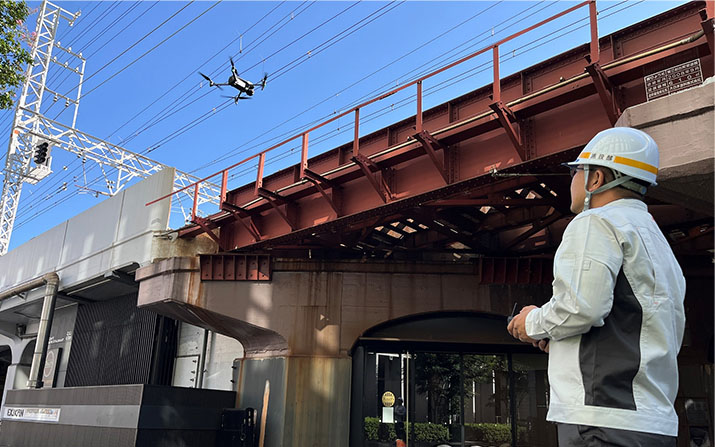
In addition to autonomous operation, the company is advancing efforts to inspect hard-to-reach locations safely and efficiently such as bridges, station buildings, and utility poles—areas where human access is difficult—using drones to enhance the efficiency and sophistication of railway facility inspections. We are working on pilot training and internal system development. As of April 2025, the company has over 60 certified pilots and deployed eight drones to offices along the railway lines.
Furthermore, during Typhoon No. 21 in 2018, widespread fallen trees and landslides occurred in the mountainous areas along the Koya Line, rendering both the railway tracks and roads impassable. Assessing the damage took considerable time. To enable rapid situation assessment during disasters like these, the company is also working to implement automated patrols using remotely operated drones.