

The journey of the new Nankai
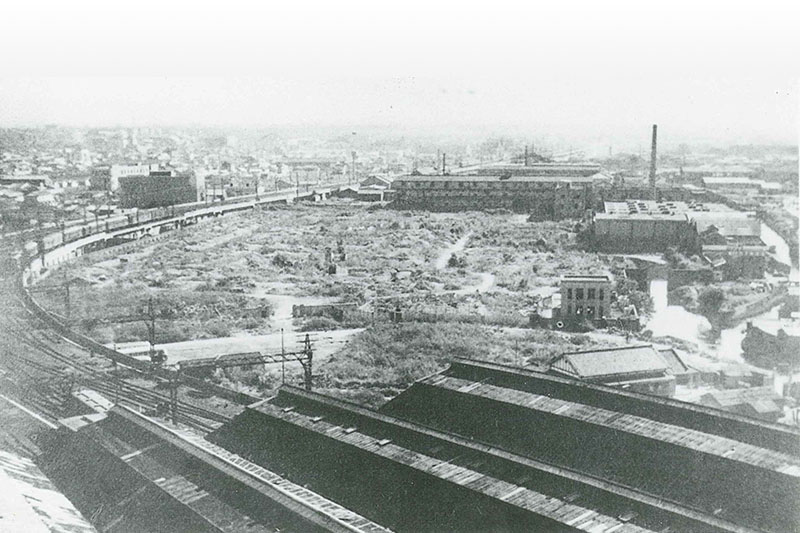
In March 1947, as momentum grew for re-independence among private railways following the war, Koyasan Electric Railway changed its name to Nankai Electric Railway. It acquired all railway and tramway lines that had belonged to the former Nankai Railway from Kintetsu Railway, starting as the new Nankai in June of the same year.
However, as the railway and tramway lines were devastated by the war, Nankai Electric Railway experienced a significant decline in transport capacity due to shortages of rolling stock and personnel. The company needed to operate large transit buses as a supplementary means of rail transport. Consequently, it merged with Nankai Shared Automobile in 1948, restating this company as its directly operated automobile business.
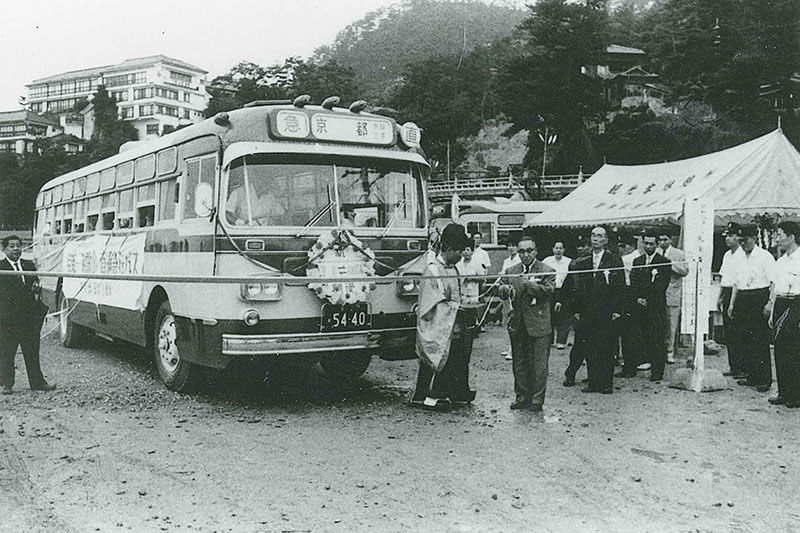
Subsequently, the Japanese economy entered a period of prosperity driven by the increased demand due to the Korean War and the strengthening of the Japan-U.S. economic cooperation framework. Nankai Electric Railway’s performance gradually recovered, and the company largely completed its post-war reconstruction work in 1951. Its automobile business, in particular, was revived remarkably. The company formed an integrated transportation network with railways and tramways, serving as the primary transport provider for municipalities along its routes. Simultaneously, the company enhanced its lines, for example, by providing direct transportation between Osaka City and Osaka’s suburbs.
After the postwar reconstruction period, Nankai Electric Railway celebrated its 70th anniversary in the late 1950s. Around that time, it achieved three major projects: (1) The opening of the Shikoku route, (2) The opening of the Misaki Park, and (3) The construction of the Nankai Kaikan. Additionally, the company experienced significant growth as a group through the dramatic expansion of bus routes, the full-scale launch of housing development projects, and the enhancement of ancillary businesses.
The expansion of bus routes was driven by a significant increase in commuters. In response to this, our company flexibly implemented measures such as establishing new offices, creating and extending routes, increasing vehicle size, and revising transport schedules to comprehensively boost transport capacity. As a result, the scale of our automobile business expanded substantially, with the route network extending to South Osaka, Wakayama City, and the Kihoku area. Reflecting Japan’s economic growth, inter-city travel and leisure trips also increased. Improved vehicle performance and better road conditions contributed to the beginning of an era of long-distance bus transportation. Furthermore, as Japan entered its period of high economic growth, the development of the expressway network and the construction of bypasses around cities progressed, adding value to buses that is distinct from their role as a complement to railways. The company made proactive efforts to provide express bus services and share routes with other companies for cross-operation.
Expansion of Nankai Service Region
During this period, private railway companies endeavored to expand their business domains in diverse ways with a focus on “tourism development” and “railway city development.” Nankai Electric Railway also implemented various measures with the aim of expanding Nankai Service Region. It comprised three zones: (1) Areas around its railway lines, (2) Kii Peninsula (Kihoku, Kinan, and part of Mie Prefecture), and (3) Shikoku and Awaji Island. The company aimed for the Nankai Group’s broader sphere of influence by expanding its transportation network to secure lines and enhancing passenger attraction facilities as key points.
In the Nanki region, the diesel semi-express Kinokuni No. 2 began operating between Namba and Shirahamaguchi in 1959, coinciding with the full opening of the National Railway Kisei Main Line (currently JR Kisei Main Line). Moreover, the Nanki No. 1 was added between Namba and Shingu in 1961, followed by the Nanki No. 2 in 1962.
Meanwhile, in the automotive sector, Nankai Electric Railway established Shirahama Express Bus in 1954, starting a direct bus service between Osaka, Wakayama, and Shirahama. In 1963, Kumano Transport began operating the Goshin Line long-distance bus service between Hashimoto, Gojo, and Shingu. Furthermore, as part of its expansion strategy, Nankai Electric Railway absorbed and merged Wakayama Electric Tramway in 1961, which operated tramways and bus networks in Wakayama City, Kainan City, and the Kihoku region, aiming to organically develop and integrate the regional transportation networks.
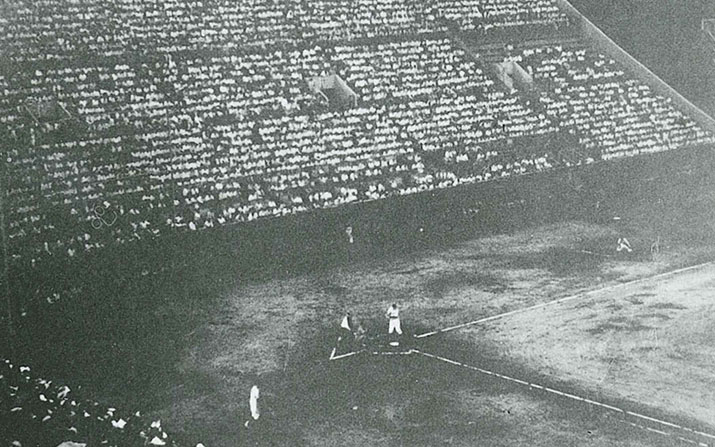
In addition to securing the lines, the company made efforts to enhance and expand the key points, including opening Osaka Stadium, the home field of Nankai Hawks, in 1950. Moreover, the company also opened the Misaki Park and reopened the Sayama Amusement Park. In the hotel and inn sector, in 1961, it opened the international tourist hotel Nakanoshima in Katsura Onsen, Hotel Pacific in Shirahama Onsen, and Tannowa-en in Misaki Town. Furthermore, in 1964, it began operating the Japanese inn Asahi in Shirahama, Manpa in Shinwakaura, and Kinokawaen in Hashimoto City.
In the Shikoku and Awaji Island region, the company gained a foothold for expansion into Shikoku by opening a ferry route to Shikoku In 1961, it participated in the management of Tokushima Bus and established Tokushima Nankai Taxi. To establish a maritime route to Awaji Island, the company participated in the management of Osaka Bay Ferry in 1961, opening a ferry route between Fuke and Sumoto.
In the 1970s, the company began to implement medium- to long-term plans based on future concepts, including major projects such as the renovation of Namba Station, the double-tracking of the Koya Line, and the construction of the Wakayamashi Station Building. Concurrently, it modernized transportation facilities based on the transport capacity enhancement plan implemented since the 1960s.
Meanwhile, the company adopted a policy of actively pursuing real estate and distribution businesses by leveraging its assets. Starting with the Nankai Sayama New Town, it advanced large-scale residential developments along its railway lines, including the Nankai Kumatori New Town, Nankai Hashimoto Rinkan Den’en-toshi, and Nankai Mika-no-dai.
Furthermore, in 1978, the company established a new distribution business division to strengthen its organizational structure. It completed the commercial complex Namba CITY in conjunction with the major renovation of Namba Station, and then focused its efforts on expanding the Shop Nankai chain of shopping centers, utilizing its own land around the station.
Projects related to the new airport
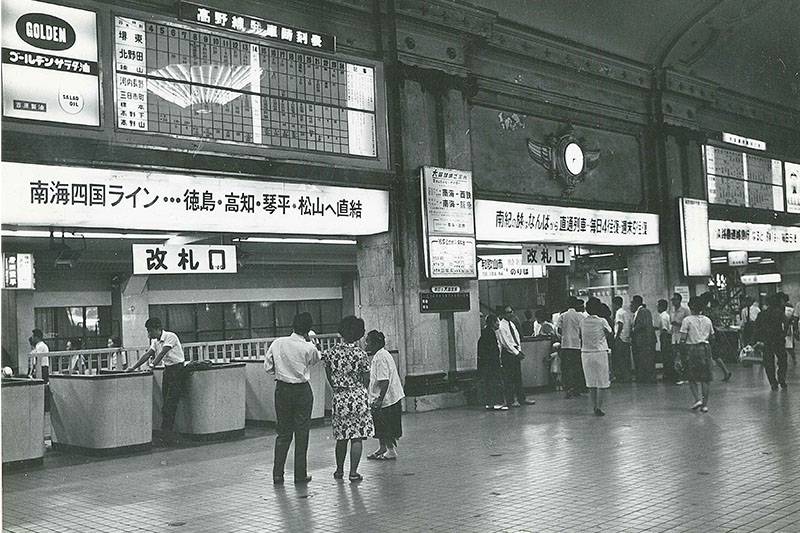
Celebrating its 100th anniversary in 1985, Nankai Electric Railway embarked head-on into projects related to the new airport such as the Airport Access Project and the redevelopment of the Namba district, following the official decision to build Kansai International Airport.
In December 1987, the company obtained its business license, followed by various construction permits. Construction began in March 1991 on the section between Izumisano and Maejima (currently Rinku Town). The Airport Line was completed in June 1994, opening on the 15th of that month in preparation for the airport’s opening on September 4th. The Airport Express Rapi:t received high praise for its convenience as the fastest access and its innovative design. More than one million passengers used the express in just over three months after the airport opened.
The construction of the Nankai South Tower Hotel Osaka marked the beginning of the Namba district redevelopment. A new company, the Nankai South Tower Hotel, was established in April 1988. Opening in March 1990, the hotel became a landmark befitting the gateway city to the world.
Meanwhile, the Namba district redevelopment plan involved the collective development of areas surrounding the Osaka Stadium, making the ballpark’s relocation a key management challenge. Amidst this, in September 1988, Daiei proposed to acquire the Nankai Hawks franchise. With a heavy heart, Nankai Electric Railway agreed to the proposal. It was formally decided that the team would restart as Fukuoka Daiei Hawks for the 1989 season.
In the bus business, the company launched the Kansai region’s first shuttle bus service between Sakai Station and Sakaihigashi Station in March 1987. Then, the company began operating the Southern Cross express bus in October 1988. For airport access, bus services were provided on the line managed directly by the company using the limousine bus Sorae and on the line of Kansai Airport Transportation, which was established jointly by the company and three airlines.
In the distribution business, the company opened the Novaty Nagano in 1989, followed successively by Shinkana City and Izumiotsu City, strengthening its network by leveraging the know-how and concept of Namba City.
In the leisure business, the company opened a large leisure pool named Pool Land RiO at Misaki Park in June 1987, making efforts to attract visitors not only during the spring and autumn leisure seasons but also during the summer.
Furthermore, in 1992, when the Kansai International Airport was about to open, the company announced a policy of aiming to become a railway business-centered community-based integrated lifestyle company. To give concrete form to the creation of a new Nankai, the company introduced a corporate identity (CI) and started to operate under a new corporate philosophy and corporate symbol in April 1993.