

Advancement of the Shinten 133 Plan
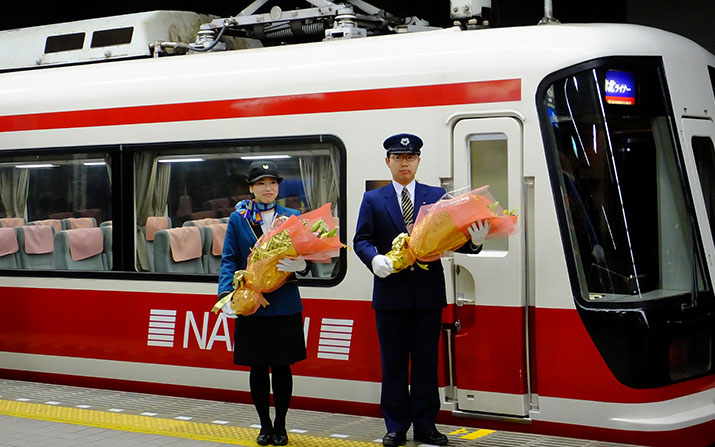
Celebrating its 130th anniversary in 2015, Nankai Electric Railway expressed gratitude to its customers through various commemorative initiatives while actively advancing measures aligned with its three-year Medium-term Management Plan, the Shinten 133 Plan, launched in FY2015. This plan set forth three core policies (top priorities): strengthening Semboku-related businesses, expanding the Kansai Airport and inbound tourism businesses, and making the Namba area more attractive.
In formulating this plan, the company positioned the following as our group’s management policies: thoroughly ensure safety and security, be environmentally driven, meticulously ensure compliance, put the customer’s perspective first, which are our group’s universal themes.
Strengthening Semboku-related businesses
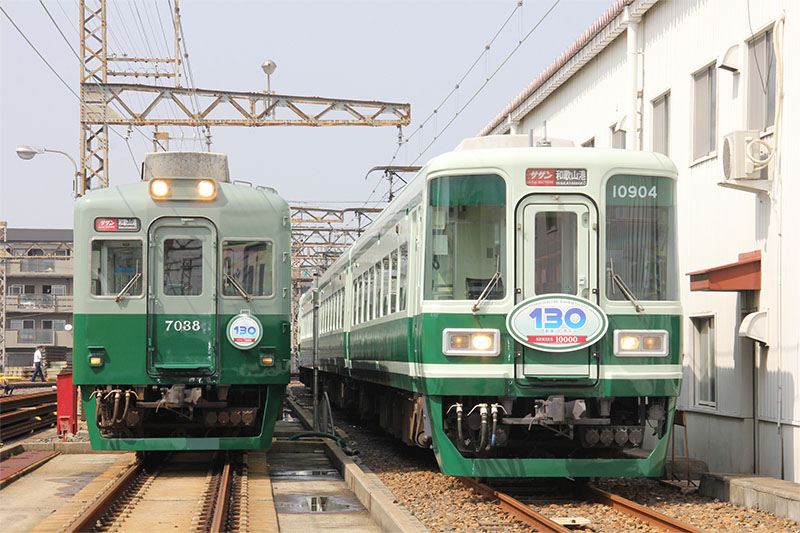
In areas along the Semboku Rapid Railway’s line, where the Semboku New Town lies, the population continued to decline. Particularly due to young people moving out of the areas, the population of child-rearing households (ages 20s to 40s) was significantly decreasing.
To revitalize the areas, our company and Semboku Rapid Railway, which had become our group company, implemented measures, such as increasing the transfer discount to ¥100 for transfers with the standard fare and increasing the discount rate to 70% for student commuter passes within the Semboku Rapid Railway’s sections.
Additionally, in October 2016, an agreement was signed with Sakai City regarding cooperation for revitalizing areas along Semboku Rapid Railway’s line within Sakai City. Following the signing, a cooperative framework was established for initiatives, such as attracting and settling families with children, to maximize the resources and expertise of both Sakai City and the railway operators in order to revitalize those areas. As the first initiative under this framework, a system was introduced to reduce the burden on students in Sakai City who commuted on the lines of our company and Semboku Rapid Railway via Nakamozu Station. (This system ended on March 31, 2022.)
To enhance speed and convenience between the Semboku area and central Osaka, the Semboku Liner limited express service, which connects Izumi-chuo Station and Namba Station in as little as 29 minutes, was introduced in time with the schedule revision on December 5, 2015. Additionally, some semi-express trains running directly on the Semboku Line were changed to section express trains, reducing travel times. To increase the area’s appeal, the company also renovated the Izumigaoka HIROBA Shops & Restaurants and the Panjo mall, while advancing the development of the Kita-Osaka Logistics Center.
Expanding the Kansai Airport and inbound tourism businesses
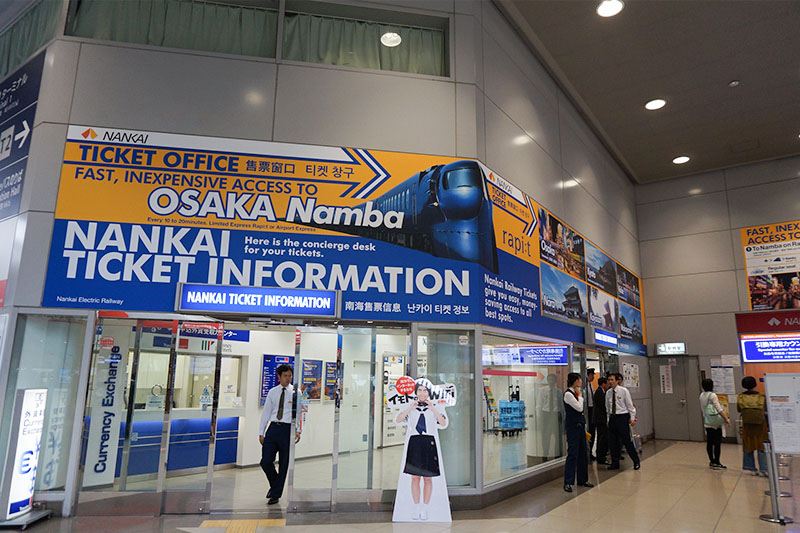
In response to the increase in inbound passengers, the company strengthened access to Kansai Airport by increasing the frequency of airport express trains, lengthening their formations, and adding more early-morning and late-night services. The company also worked to create special overseas ticket packages and enhance their sales. Moreover, it enhanced multilingual guidance, expanded free Wi-Fi coverage, and increased dedicated counters for foreign passengers. It also pursued expansion in the surrounding areas by promoting the development of hotels, guesthouses, and employee dormitories for companies associated with Kansai Airport.
Making the Namba area more attractive
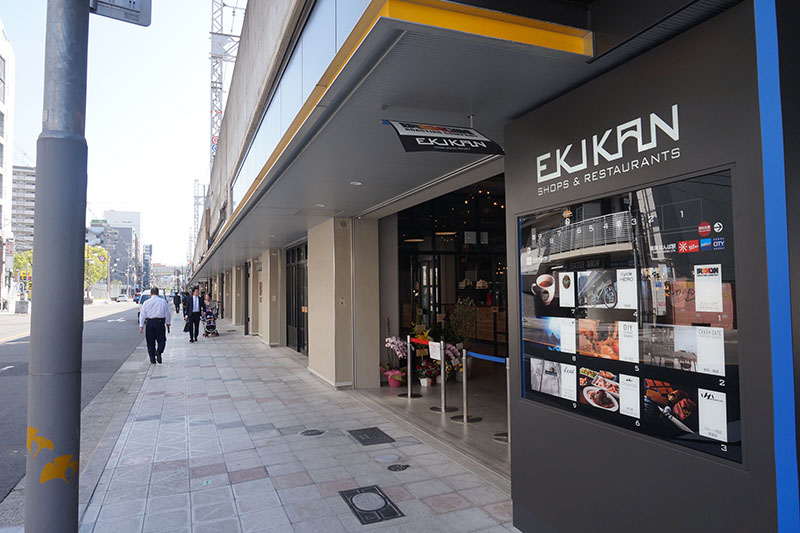
As part of the Nankai Kaikan Building reconstruction plan, the company advanced the construction of the NAMBA SkyO. To enhance the potential of the Namba area, it also renovated the Namba City and Namba Parks, while opening the third and fourth phases of the Namba EKIKAN. In 2017, the company was selected as a proposal contractor for the Shin-Imamiya Station area development project. This project became an important foothold for development in the Shin-Imamiya area, which generated high expectations as a new gateway to Minami.
JCR rating change
Based on the Shinten 133 Plan, the company steadily worked to further strengthen the business foundation for both quantitative growth (expanding revenue) and qualitative improvement (enhancing financial soundness). In October 2016, our long-term issuer rating and domestic commercial paper rating were upgraded from BBB+ to A- and from J-2 to J-1, respectively, by the Japan Credit Rating Agency (JCR). This signified that our company was judged to be highly and consistently reliable in discharging liabilities, regardless of whether they were long-term or short-term, reflecting our Group’s steadily strengthened management foundation.
In August 2024, the long-term issuer rating was changed to A.
Reverse stock split implemented
In accordance with the “Action Plan for the Standardization of Trading Units” of the stock exchanges in Japan, at the Board of Directors meeting in March 2017, our company resolved to change the number of shares per unit from 1,000 shares to 100 shares and to conduct a reverse stock split for our shares, in order to adjust investment units to an appropriate level. This resolution was approved at the 100th Regular General Meeting of Shareholders held in June of the same year. Effective October 1, 2017, the shares held by shareholders recorded in the final shareholder register as of September 30 were consolidated by replacing every five shares with one share.
Naniwasuji Line project
The Naniwasuji Line is a new railway line that connects the Osaka Station Umekita Area, which opened in March 2023, to JR Namba Station and Shin-Imamiya Station on the Nankai Line. The plan is for Kansai Rapid Railway to develop and own the railway facilities, while JR West and our company will operate passenger services using these facilities. The development of the Naniwasuji Line is expected to yield benefits such as direct connections from Shin-Osaka and central Osaka to southern Osaka regions, which is a national core route, enhanced access to Kansai International Airport, and the stimulation of extensive exchange between tourist hubs.
In May 2017, five parties (Osaka Prefecture, Osaka City, JR West, Nankai Electric Railway, Hankyu Corporation) announced their agreement on the basic plan for the Naniwasuji Line in preparation for its development.
On March 30, 2018, our company and JR West agreed to jointly bear the entire 33 billion yen of private investment in Kansai Rapid Railway for the Naniwasuji Line project.
This amount was half of the 66-billion-yen capital representing 20% of the total project cost of 330 billion yen. This capital was borne equally by local and private investors at 50% each. The private investment ratio was determined as 44% (14.5 billion yen) for JR West and 56% (18.5 billion yen) for our company.
On July 10, 2019, Kansai Rapid Railway, JR West, and our company received the railway business license for the Naniwasuji Line from the Minister of Land, Infrastructure, Transport and Tourism. Kansai Rapid Railway, the development entity, obtained urban planning project approval for the railway area in August 2020 and for the road area in January 2021. In addition to advancing land acquisition and compensation work, including land surveys and building inspections, efforts toward opening are steadily progressing. Specifically, construction commenced in October 2021 on the Nakanoshima Station (tentative name) section and the Nishi-Honmachi Station (tentative name) section. Preparatory work also began on the Nankai Shin-Namba Station (tentative name) section and the Minatomachi Shaft section.
Results of the Shinten 133 Plan
The company steadily advanced various initiatives centered on our core policies: “Strengthening Semboku-related businesses,” “expanding the Kansai Airport and inbound tourism businesses,” and “making the Namba area more attractive.” Additionally, there were an increasing number of passengers on the Airport Line due to the rise in foreign visitors to Japan. As a result, the initial targets of the Shinten 133 Plan were achieved. Consolidated operating income for FY2017 exceeded the initial plan of 30 billion yen, reaching 33.9 billion yen. The consolidated interest-bearing debt/EBITDA ratio cleared the initial plan of 8.8 times, achieving 7.69 times. However, there were still the challenges of adapting to changes in the transportation business’s revenue structure, executing investments within the growth investment framework, and advancing the sophistication of logistics facilities.