
The founding of Japan’s oldest private railway
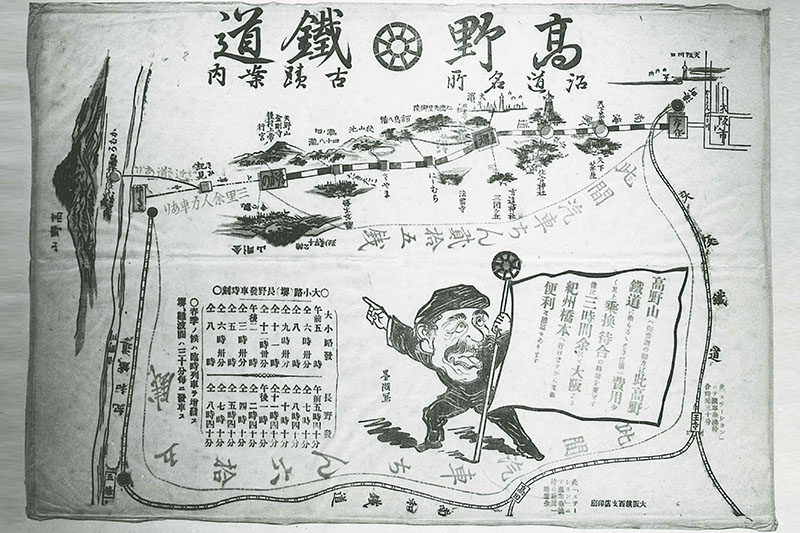
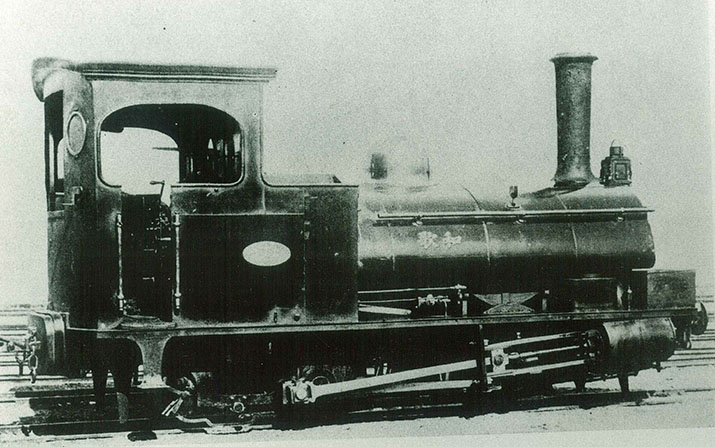
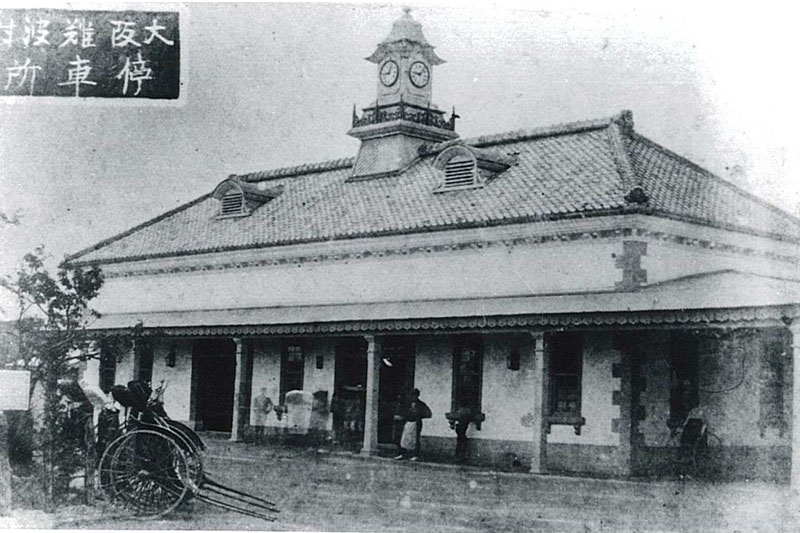
In June 1884, nineteen individuals, including prominent figures in Osaka’s business community, such as Denzaburo Fujita and Jutaro Matsumoto, established the Osaka–Sakaikan Railway, Japan’s first purely private funded railway company, and obtained a construction license. This railway company, which connected Osaka and Sakai as it was named, was renamed to Hankai Railway, the predecessor of our company, in November of the same year. This marked the beginning of our 140-year history.
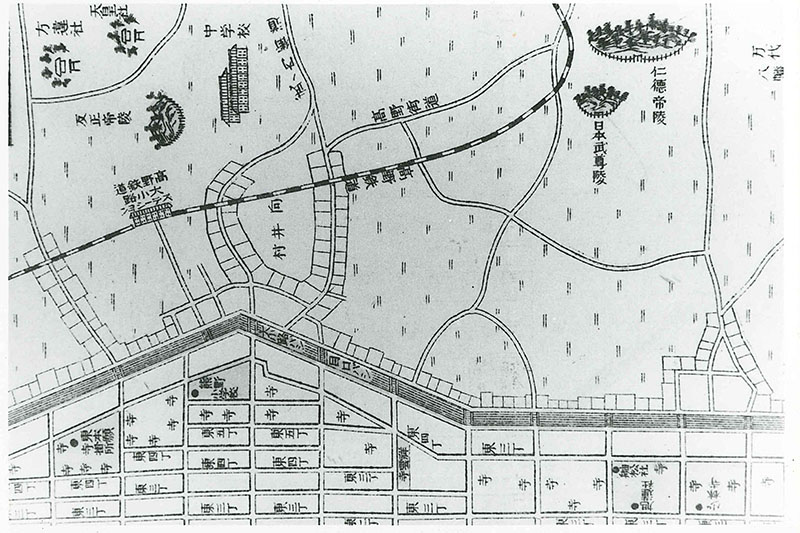
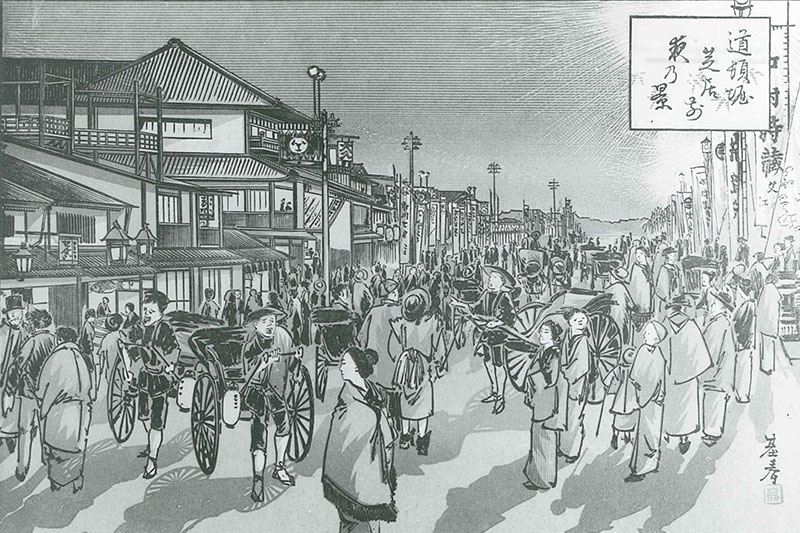
Osaka’s Minami district had been known since the Edo period for the Dotonbori Five Theaters and the lively streets in Hozenji Yokocho. However, even when a ward system was implemented in 1879, this bustling place only extended north to Dojima and south to Dotonbori; once you crossed the Dotonbori River, you found yourself at the edge of downtown. Regarding the state of the area around Namba Station at that time, the August 1959 publication of Osaka Rekishi Sanpo (a book about Osaka’s history) says the following:
“The history of Namba began with the opening of Nankai Railway. At that time, the Namba area was a vast expanse of green onion fields stretching to the Sennichi Cemetery, and the Namba Shinkawa waterway flowing through, it was (omitted) a desolate place. In this area, steam locomotives of Hankai Railway, Japan’s first private railway company, began their 80-year journey in 1884, and this company later became Nankai Railway. In 1904, the Monopoly Bureau’s tobacco factory was built on the site of the dismantled former shogunate warehouses after the Meiji Restoration, and (omitted) tobacco production began. Around that time, Osaka Sumo held its grand opening near Dobashi Bridge where the Namba Shinkawa waterway flows. Thus, the Namba area finally began to become crowded with people.”
Railway construction progressed smoothly, and a 7.6 km Namba-Yamatogawa section of the railway for small steam locomotives opened in December 1885. Subsequently, in May 1888, the railway was extended to Azumabashi in Sakai, completing the full opening of the Namba-Sakai section as originally planned.
From Hankai Railway to Nankai Railway
The opening of Hankai Railway triggered a wave of privately funded construction of railways nationwide, sparking the first private railway boom. Under such circumstances, Kisen Railway was planned in 1889 to connect Sakai and Wakayama, and Kihan Railway was established in 1891.
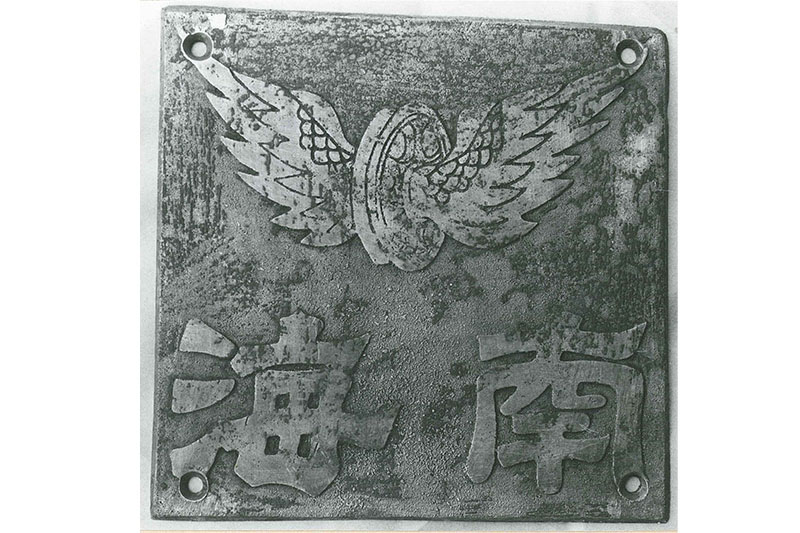
Kisen Railway was established as a separate company by executives from Hankai Railway. Since it was essentially an extension of Hankai Railway’s lines, a merger between the two companies was in a process of finalizing in 1893. However, negotiations were also held with Kihan Railway, which had applied for a railway line to Wakayama around the same time, and a decision was made to make a joint application, and thus Kihan Railway merged with Kisen Railway in October of the same year. The new company was named Kisetsu Railway, but later renamed to Nanyo Railway, and then to Nankai Railway. The name “Nankai,” which was first proposed at the time, was a grand and ambitious name inspired by ancient roads such as Tokaido, Nakasendo, and Sanyodo.
Nankai Railway, established in 1895, opened its Sakai-Izumisano section in October 1897. Then, it fully acquired the operations of Hankai Railway in October 1898 and opened the Namba-Wakayamashi section in March 1903 after working on further extensions. This completed the Nankai Line. Simultaneously, a connecting line linking Wakayamashi Station and Kiwa Railway (currently JR Wakayama Line) was also completed. This greatly facilitated pilgrimages to Koyasan from the Osaka area, allowing through-running services.
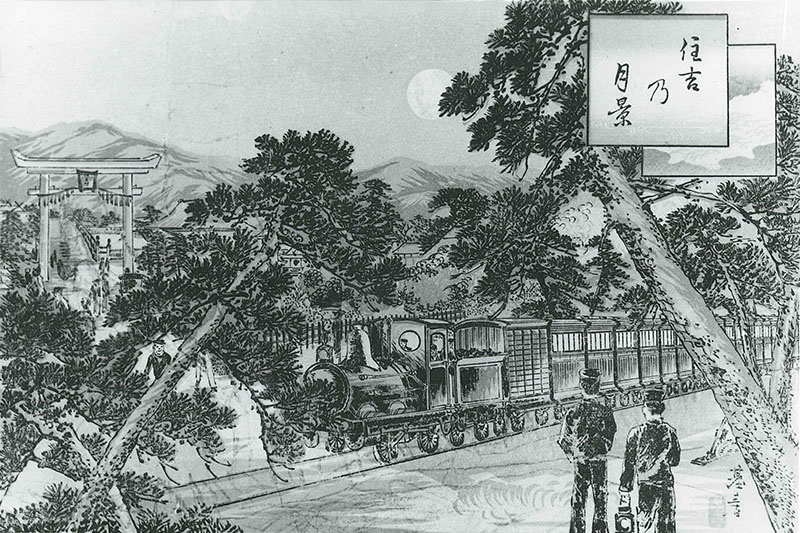
Furthermore, the network was extended to Umeda in 1901. In 1900, the Tennoji Branch Line was opened to provide a connecting line linking Tengachaya to Tennoji Station of Kansai Railway (currently JR Kansai Main Line). Nankai Railway started direct through services between Sumiyoshi and Umeda after entering into an agreement with Kansai Railway, which had absorbed Osaka Railway (currently JR Osaka Loop Line) and opened the Tennoji-Umeda section in 1895.
The era of electric trains
From the late Meiji period through the Taisho period, private railway companies transitioned from steam locomotives to electric trains, sparking a second private railway boom. During this time, the Kansai region’s major private railway companies such as Mino-Arima Electric Tramline (currently Hankyu Corporation) and Osaka Electric Tramway (currently Kintetsu Railway) opened successively.
Under such circumstances, Nankai Railway, which had been quick to electrify the Namba-Hamaderakoen section in 1907, rapidly expanded its rail network through mergers. It merged with Naniwa Electric Tramway in 1909 to form the Uemachi Line, and then merged with Hankai Electric Railway in 1915 to form the Hankai Line and the Hirano Line. The electrification of the sections south of Hamaderakoen progressed. The entire line between Namba and Wakayamashi was electrified in 1911, while the concurrent double-tracking project was completed in 1922.
The predecessor of the aforementioned Naniwa Electric Tramway was Osaka Horse Railway, which was founded in 1897. Its plan was to connect Tennoji and Sumiyoshi via horse tramway, aiming to attract visitors to Sumiyoshi Taisha Shrine and to the amusement park, which was located in Tengachaya at that time. This link was a parallel route for Nankai Railway, so it opened the Tennoji Branch Line as a countermeasure in 1900 to connect Tengachaya and Tennoji. Subsequently, facing mounting costs and stagnant transportation revenues, Osaka Horse Railway recognized the limitations of the horse tramway and decided to convert to electric operation. It changed its name to Osaka Electric Tramway in March 1907 and then to Naniwa Electric Railway in October of that year, commencing electrification work. Around this time, disagreements arose between its major shareholders and management, leading to a merger with Nankai Railway in December 1909 through the mediation of Denzaburo Fujita, a leading figure in the Kansai business community, despite difficult negotiations.
Expansion of Nankai Railway
Established in 1910, Hankai Electric Railway applied for a route connecting Ebisucho in Osaka to Hamadera in Sakai, with a branch line connecting Shukuin and Ohama Aquarium. This became a threat incomparable to the aforementioned Naniwa Electric Railway. Anticipating this formidable rival’s full-scale launch of operations, Nankai Railway initiated a countermeasure in 1905 by proactively expanding into related businesses.
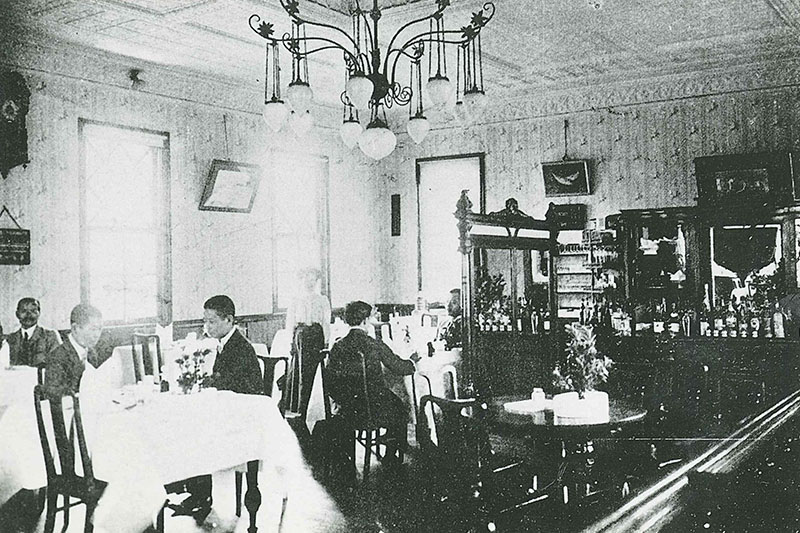
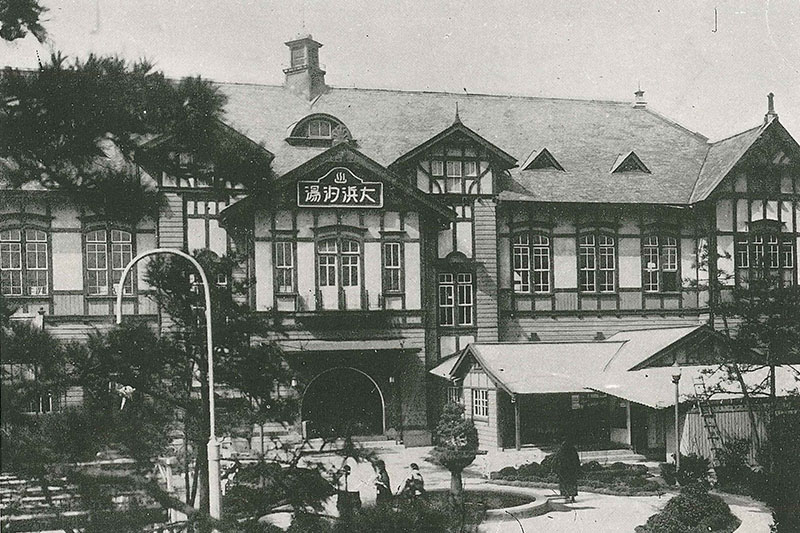
It established an amusement ground in Hamadera Park that featured a novel Western-style building and operated its own restaurant. Moreover, it unveiled the Hamadera Hall and opened the Hamadera Bathing Beach in 1906. It also began offering Western cuisine and Japanese/Western beverages in a buffet car of the express steam trains between Namba and Wakayamashi. It commenced the full-scale development of the Tannowa Amusement Park in 1908, and then opened the large dining hall Nankai Restaurant on the second floor of Namba Station’s waiting space in 1911. This led to other electric railway companies starting to operate their own restaurants as a side business.
In response, Hankai Electric Railway, which opened its entire line in 1912, embarked on developing the Ohama Park, pouring all its efforts into attracting customers through projects such as building the Ohama Hall and the Ohama Seawater Bathhouse. Hankai Electric Railway employed every possible strategy to compete with Nankai Railway. The battle to attract passengers between the two companies became excessive, escalating into discount services and extreme price wars. Eventually, most shareholders shared the view that the two companies should halt this futile competition and cooperate for mutual development. Consequently, they merged in June 1915 with Nankai Railway as the surviving entity.
Formation of the Koya Line
Nankai Railway merged with Osaka Koya Railway and Koya Daishi Railway (which is currently the Koya Line) in 1922. Thus, Nankai Railway completed the full opening of → completed the entire section between Shiomibashi and Koyashita and connected the railway to the Nankai Line at Kishinosato in July 1925.
The predecessor of Osaka Koya Railway mentioned here was Koya Railway, which was founded in 1896. Incidentally, Koya Railway’s name prior to establishment was Sakaibashi Railway, but it was renamed probably with visitors to Koyasan in mind. Koya Railway began operations between Oshoji (Sakaihigashi) and Nagano in 1898. However, the opened section ran through purely rural areas with no connection to central Osaka, resulting in extremely poor business performance. Therefore, Koya Railway began operations between Dotonbori (Shiomibashi) and Oshoji (Sakaihigashi) in 1900, implementing various measures such as direct train services between Osaka and Nagano. However, as business performance failed to improve, it was decided to establish a new company and transfer all operations of Koya Railway to the new company. Koya Mountain Railway, established in 1907, extended its Nagano-Hashimoto section with the future goal of reaching Koyasan. After Koya Mountain Railway’s inception, it actively pursued passenger-attraction measures with the existing line to improve performance. The Nagano-Hashimoto section opened in 1915, finally showing signs of improved performance. Concurrently, the company name was changed to Osaka Koya Railway, emphasizing the image of its line from the major city of Osaka to Koyasan.
The other company, Koya Daishi Railway, was established in September 1917 to obtain the right to build tracks from Wakayama Hydroelectric Power when Osaka Koya Railway extended south of the Kinokawa River to Koyasan.
The fact that Osaka Koya Railway extended to Hashimoto meant that Osaka Koya Railway became a formidable competitor to Nankai Railway. Seeking to unify transportation services in the southern Osaka area, Nankai Railway had been looking for an opportunity to merge with Osaka Koya Railway as soon as possible. Thus, in 1922, the two companies agreed to a merger on equal terms. At the same time, Koya Daishi Railway was also merged into the new entity.
Furthermore, in March 1925, Koyasan Electric Railway was established as a subsidiary of Nankai Railway with the aim of building a railway line from Koyashita to Koyasan. The section from Koyashita to Kii-Kamiya opened in 1928, followed by the section from Kii-Kamiya to Gokurakubashi in 1929. The construction of the remaining line to the top of Koyasan was completed in the following year of 1930, and the cable car line was opened. In April 1932, Nankai Railway and Koyasan Electric Railway began through services between Namba and Gokurakubashi, essentially completing the formation of our company’s current main line.