
Formulation of the Nankai Group Management Vision 2027
In the Shinten 133 Plan, implemented from FY2015 to FY2017, Nankai Electric Railway achieved its numerical targets for each fiscal year. However, the company anticipated that our group would face increasingly intense environmental changes going forward, such as population decline and IT evolution. Therefore, in order to achieve sustainable growth, the company deemed it necessary to define a long-term vision of our desired future state and steadfastly implement various measures to achieve it. Consequently, the Nankai Group Management Vision 2027 was formulated in February 2018.
The vision described what our group should be after ten years, stating that the group would aim to “develop the most popular areas along railway lines and become the most preferred corporate group by delivering satisfaction and delight to customers.” It also defined the direction for the next decade as “a decade of enhancing the attractiveness of areas along our railway lines in preparation for the opening of the Naniwasuji Line.” Furthermore, it defined the following business strategies: “Developing the most popular areas along railway lines” to “reverse the demographics from high outflow to high inflow in 10 years,” and “Deepening and expanding our real estate business” to develop it to generate over half of total operating income, as another pillar of growth next to the railway business.
The company anticipated that the two business strategies would generate synergistic effects by strengthening the group management foundation (thorough business selection, IT-driven corporate organization, human resources strategy, financial strategy) to provide a solid underpinning. Based on this, the numerical targets (consolidated basis) for FY2027, the final year of the vision, were set as follows.
- Operating income*1:
- 45 billion yen
- Interest-bearing debt/EBITDA*2 ratio:
- Approx. 6x
*1 Operating income + Dividend income
*2 Operating income + Dividend income + Depreciation and amortization
The Kyoso 136 Plan announced
The Medium-term Management Plan implemented from FY2018 to 2020 was positioned as a three-year foundation-building phase toward achieving the Nankai Group Management Vision 2027, serving as a plan to lay the groundwork for future growth. Considering it necessary to work with all stakeholders to achieve future growth and create new value, the company saw these three years as a time of collaborative creation and named the plan “Kyoso 136 Plan.”
The five basic policies of the plan were as follows:
- Provide safe, reliable and high-quality transportation services
- Drive the urban development of Namba
- Increase the number of visitors to the region, beginning with inbound passengers
- Drive urban development centered on train stations
- Upgrade and expand the real estate business
The numerical targets (on a consolidated basis) for FY2020, the final year of the plan, were as follows.
- Operating income*1:
- 37 billion yen
- Interest-bearing debt/EBITDA*2 ratio:
- 7.5x or lower
*1 Operating income + Dividend income
*2 Operating income + Dividend income + Depreciation and amortization
Closure of Misaki Park
Misaki Park opened in 1957 and was beloved for approximately 63 years, primarily by families living along the railway line, as a comprehensive amusement park rich in nature, featuring a zoo and dolphin shows. In 1987, its 30th anniversary year, it opened the large pool, the Pool Land RiO. In FY1989, it recorded an attendance of approximately 720,000. However, visitors subsequently declined due to diversification in leisure activities, falling to an attendance of approximately 360,000 by FY2017.
The company implemented demand-stimulating measures such as expanding facilities, i.e., the new dolphin aquarium Shiny Stadium. However, persistent annual deficits prevented fundamental improvement, leading to an impairment loss of approximately 3.3 billion yen in FY2017. In addition, the closure of Pool Land RiO due to typhoon damage in 2018 further exacerbated the situation, resulting in the decision to withdraw from the business by March 31, 2020. The animals were transferred to other facilities, including Adventure World.
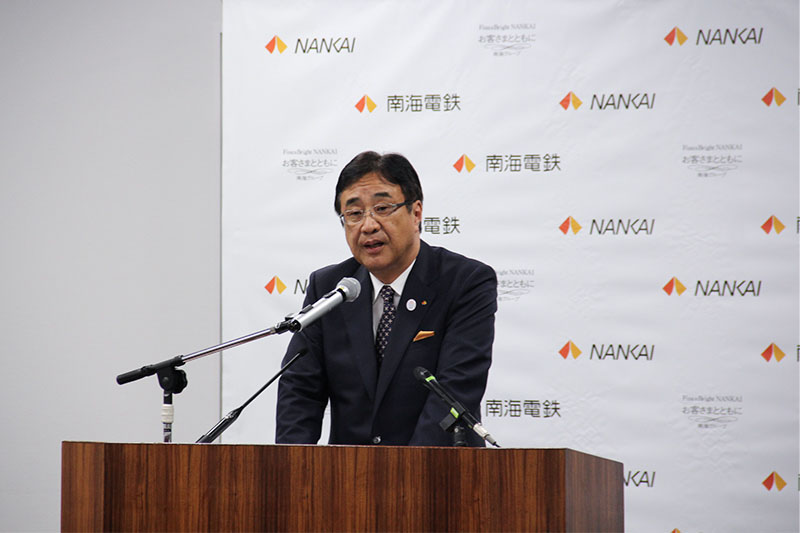
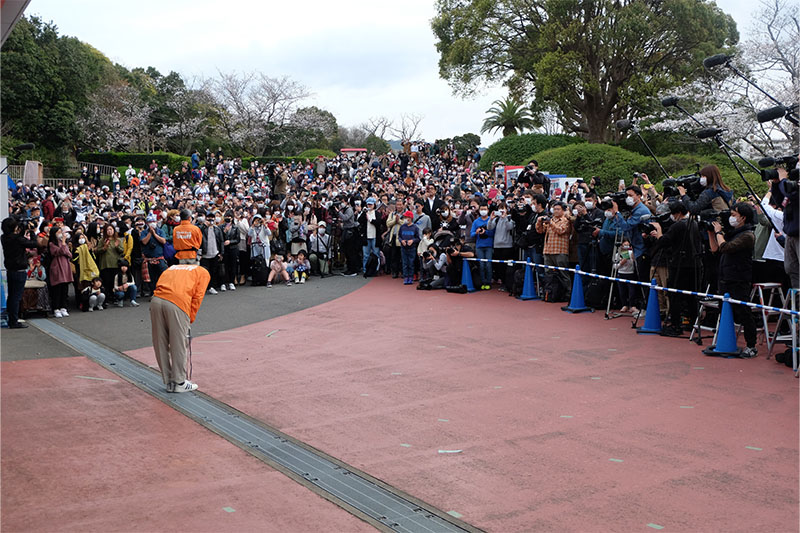
Due to the COVID-19 pandemic, some appreciation events planned ahead of the closure date were canceled. In March, the final month of operation, saw repeated temporary closures and reopenings. There were concerns the park might close permanently without reopening, but for the final two days, operations resumed with only outdoor facilities open. At the Shiny Stadium, a dolphin show was held with attendance limited to 200 people selected by prior lottery. Many people gathered outside the facility to bid farewell. Staff originally planned to give a final farewell at the entrance on the final day of operation. However, to avoid crowding of visitors who wanted to witness the end, it was decided to limit the farewell to a brief address by the park director. Misaki Park thus closed its doors, bringing an end to its history.
Initiatives to enhance brand power
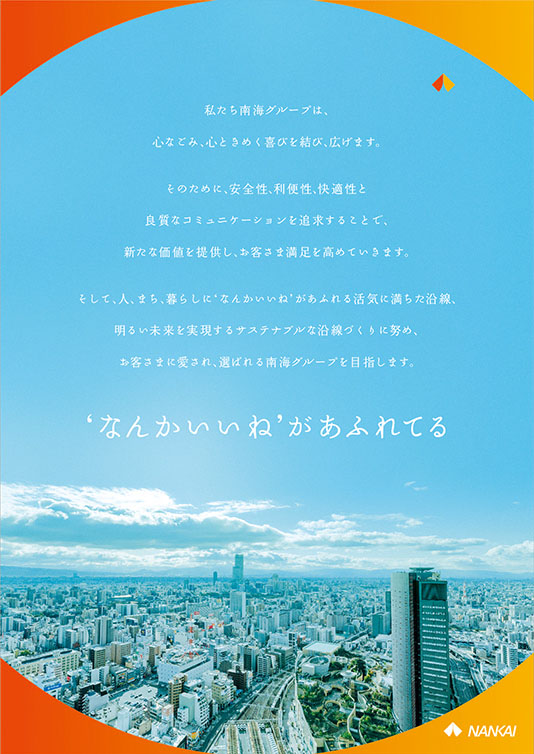
Brand slogan established Bound for good times
As stated in the Nankai Group Management Vision 2027, the company aims to “develop the most popular areas along railway lines and become the most preferred corporate group by delivering satisfaction and delight to customers.” To this end, enhancement of the brand power is essential. The brand slogan plays a crucial role in this endeavor.
To determine a new brand slogan, four candidates were devised based on the brand concept, “Enhancing the joy of peace and excitement.” In March 2019, a vote was held among all Nankai Group employees, receiving responses from 3,264 people. The result was the selection of “Bound for good times.”
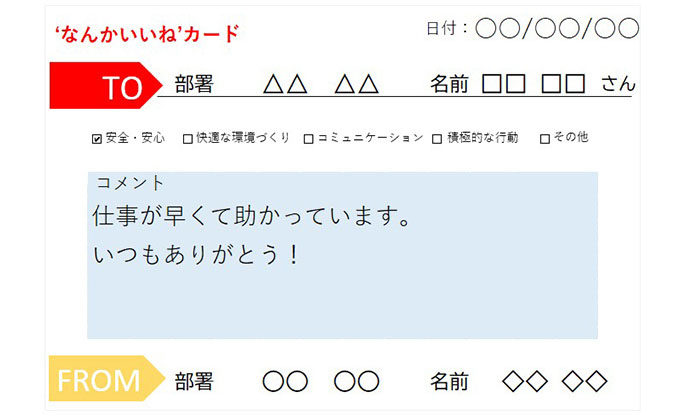
After the establishment of the slogan, the Nankai Brand Book is used in training sessions and workplaces to ensure that each and every Nankai employee understands the significance and necessity of enhancing brand power and embraces it as their own responsibility. Additionally, the company conducts regular surveys (questionnaires) to gauge employees’ brand awareness and engages in internal brand-enhancement activities such as the Nagomi Tokimeki Activity. This activity aims to boost employees’ motivation and foster communication among staff, exemplified by the “Bound for good times” card program.
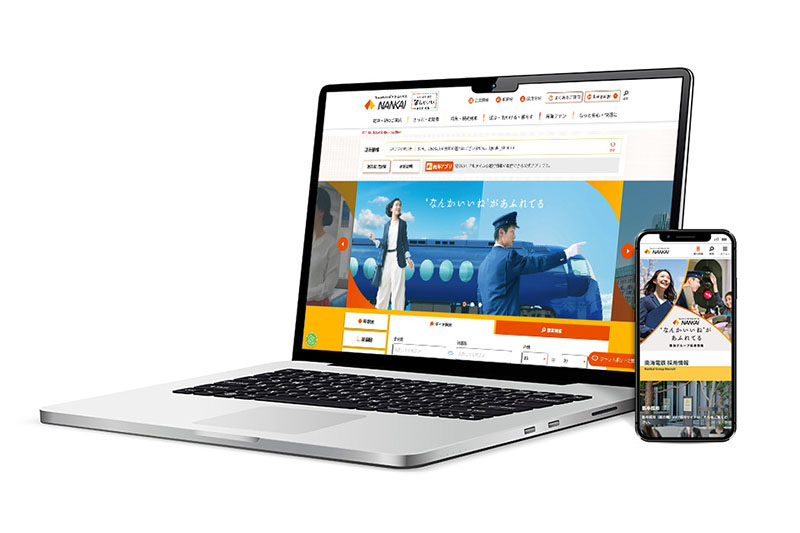
Comprehensive redesign of the official website
The official website is an essential medium for achieving better communication with our stakeholders.
In August 2022, we completely revamped our official website for the first time in about 10 years. We introduced an AI-powered FAQ site and chatbot, creating an environment where rail passengers can resolve their questions quickly and anytime online. Furthermore, on September 1, 2023, we released a brand message movie on the website.
The redesign of the website prioritized enhancing IR and sustainability information, and this led to it being selected as an Excellent Website for two consecutive years from FY2022 and as the Best Website in FY2024 in the Overall Category of Nikko Investor Relations’ Corporate Website Ranking Survey of All Listed Companies. Additionally, our website received an Excellent Award in Daiwa Investor Relations’ Daiwa Internet IR Awards 2024.
Results of the Kyoso 136 Plan
The Kyoso 136 Plan was a three-year period dedicated to laying the groundwork for future growth through focused upfront investments. This included the launch of NAMBA SkyO, the expansion of our real estate rental portfolio, and the upgrade of logistics facilities, as well as the enhancement of transportation capacity and the establishment of a stress-free mobility environment. The company also actively worked to strengthen alliances with other parties and enhance new business ventures.
The specific results of implementation of the five items for the basic policy are as follows:
- Provide safe, reliable and high-quality transportation services
- Renewed carriages (24 cars for the Nankai Line, 30 cars for the Koya Line, and 2 cars and 2 trains for the Cable Line)
- Beautified station restrooms (36 stations) and installed platform gates (Namba Station)
- Steadily enhanced the safety of facilities against natural disasters and the operational safety of our railways (set up bridge abnormality detection equipment and reinforced elevated pillars and train stations for earthquake resistance)
- Drive the urban development of Namba
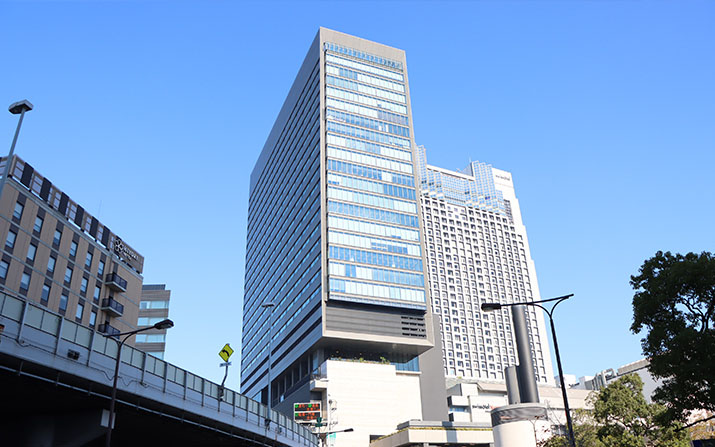
- Improved the neighborhood zones around the Nankai Terminal Building (opened NAMBA SkyO and acquired revenue-generating properties)
- Formed a north-south corridor linking the Namba, Shin-Imamiya, and Shinsekai areas (continued the Namba Naka 2-Chome Development Project and the Shin-Imamiya Station Renewal Project, and participated in and contributed capital to the Hoshino Resort OMO7 Osaka Shin-Imamiya Development Project)
- Increase the number of visitors to the region, beginning with inbound passengers
- Upgraded the environment for receiving foreign travelers visiting Japan (adopted an e-ticket format for advance-purchase passenger tickets for overseas travel agencies and launched an electronic payment service)
- Promoted tourism in ways that tap into the special features of areas along our railway lines (promoted the Koya-san Sightseeing Enhancement Project and the Kada Sakana Line Project)
- Improved the attractiveness of areas along our railway lines by creating jobs and industry (continued the Kada Renovation Town Development Project and held Atotsugison, an innovation aid program for companies in areas along our railway lines)
- Drive urban development centered on train stations
- Improved the attractiveness of our railway lines by redeveloping train stations (opened Ki:no Wakayama)
- Revived and revitalized Semboku New Town (continued renovation of the Izumigaoka Station and the Izumigaoka Station Front Vitalization Project)
- Upgrade and expand the real estate business
- Upgraded logistics facilities (Kita-Osaka Logistics Center) (put Building 1 into operation and arranged for construction of new Buildings A and E)
- Expanded the real estate rental portfolio (Namba Midosuji Center Building and Namba Front Building)
As a result, in FY2019, consolidated operating income reached a record high, increasing the possibility of achieving the numerical targets of the Kyoso 136 Plan (operating income of ¥37 billion, interest-bearing debt/EBITDA ratio of 7.5 times or less) one year ahead of schedule. However, the company was significantly impacted by the COVID-19 pandemic, which began in early 2020, resulting in the targets for FY2020 not being met.
Amid growing societal uncertainties such as infectious diseases and natural disasters, key management challenges emerged. These include the following: expanding to rotational real estate business and pursuing fee-based business, reinforcing a revenue base not overly reliant on inbound tourism, turning around the financial position harmed by the COVID-19 pandemic, and building a business structure with an eye on the post-COVID-19 years and medium- to long-term local demographics.