
Entry into the bus business
In the early Showa period, Osaka underwent dynamic urban development, including the construction of Midosuji Avenue and the opening of the subway system. Responding to this urban planning, Nankai Railway entered the bus business in 1928. It built the Nankai Building at Namba Station in 1932, completing a facility connecting to the subway. The later Nankai Group’s basic approach to business expansion was probably established around this time.
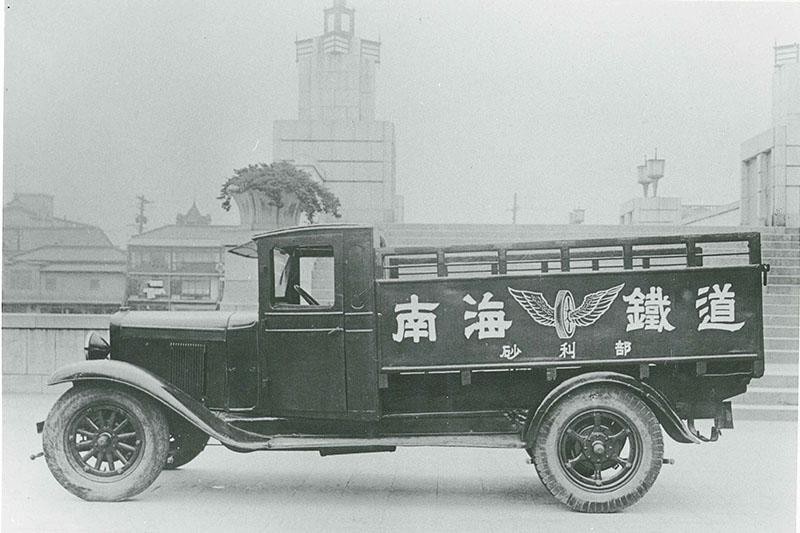
Nankai Railway’s automobile business was unable to acquire a license for transit bus operations, so it had to start out as a freight business by purchasing seven vehicles. Subsequently, it attempted to acquire business from existing surrounding operators or take a stake in them. It began with the merger with Izumi Automobile in July 1928, which had operated approximately 20 km of routes primarily on the Ushitaki Line, and rapidly merged with other surrounding bus operators. Within 10 years, Nankai Railway established its own bus network covering nearly all regions along its railway lines. In 1938, three companies—Nanko Automobile, Kishiwada Nankai Automobile, and Showa Automobile—merged with Sakai Shared Automobile and unified their trade names to Nankai Shared Automobile. The new company was established as an affiliate of Nankai Railway. In October of the same year, all of Nankai Railway’s directly operated bus operations were transferred to Nankai Shared Automobile.
Competition with Hanwa Electric Railway and wartime integration
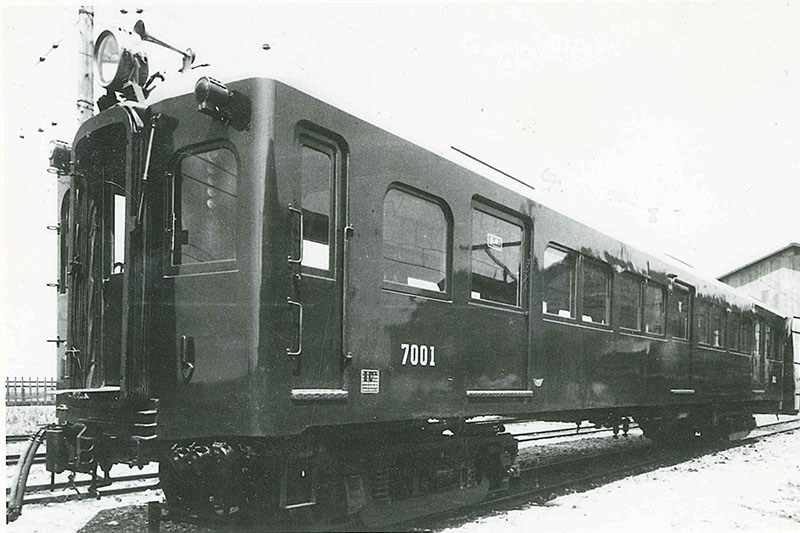
In June 1930, Hanwa Electric Railway, which completed the entire section between Tennoji and Higashi-Wakayama parallel to the Nankai Line, introduced high-speed trains, engaging in fierce competition with Nankai Railway. While featuring more rapid services, Hanwa Electric Railway also strived to improve convenience and service quality. Furthermore, it ventured into the transit bus and housing development projects, as well as opened the Sunagawa Amusement Park for leisure activities. It pursued aggressive business expansion, competing directly with Nankai Railway, which had already developed an extensive range of related businesses.
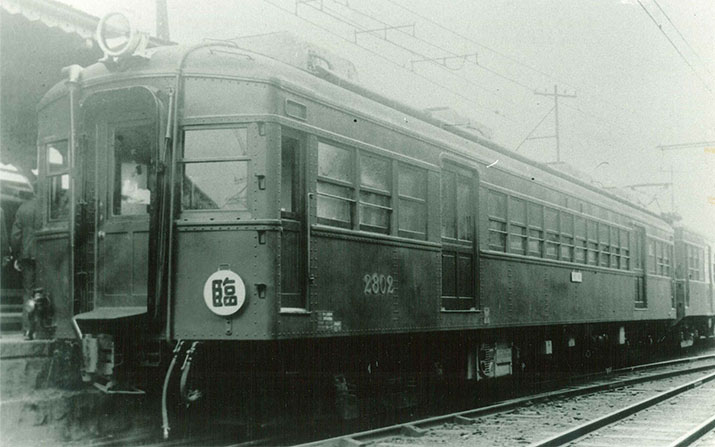
Particularly, in a fierce competition for direct trains to National Railway Shirahamaguchi Station in the Nanki area, Hanwa Electric Railway began operating the Kuroshio-gō train service in 1933, while Nankai Railway began running the Kuroshio Train service in 1934. Nankai Railway introduced Japan’s first air-conditioned cars for commercial service in 1936, earning praise from passengers. However, with the outbreak of the Sino-Japanese War, authorities criticized the cars as extravagant and a waste of resources, and their use was discontinued in 1938.
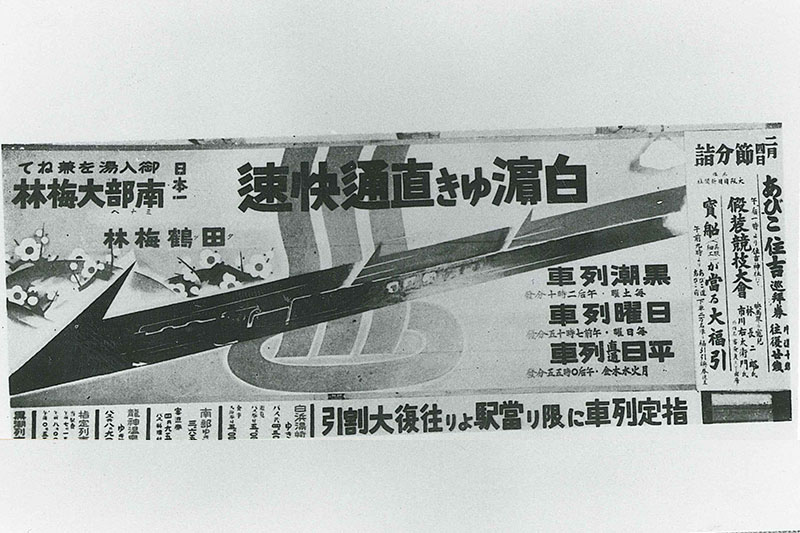
Eventually, the competition between the two companies for train speed and fare discounts, etc. led to safety and economic concerns. Following recommendations from the transportation authorities, in December 1940, Nankai Railway absorbed and merged with Hanwa Electric Railway, whose line was renamed Nankai Railway Yamate Line.
However, in December 1941, the Pacific War erupted. As the atmosphere of war intensified daily, the government vigorously pushed for the consolidation and merger of private railways to strengthen wartime transportation systems. Nankai Railway was unable to resist this trend as it absorbed and merged with Kada Electric Railway in February 1942, which had operated between Wakayamaguchi and Kada. In May 1944, when the war situation worsened further, Nankai Railway was forced to transfer the Nankai Railway Yamate Line to the Ministry of Transport and Communications, renaming it the National Railway Hanwa Line. In June of the same year, it was compelled to merge with Kansai Express Railway and change its company name to Kintetsu Railway.
Until the prewar name Nankai Railway was changed, the company had three affiliated companies in addition to its automobile business. One of these was Nankai Baseball, established in 1938, which debuted as Nankai Club, the 9th professional baseball team in Japan. While its purpose was to enhance the company’s passenger service and corporate image nationwide, the company, known for its enthusiastic attitude toward sports, became inevitably swept up in the excitement and rallied to cheer on the team. It later became Nankai Hawks.